Choosing a bank nowadays became a really complicated task. When the day comes for you to branch out and get a bank account of your own, there are many things to consider. Your goal should be to find a financial institution that you are comfortable using and supports your personal goals. Let’s get started! After all, the process of choosing a bank is not one you should rush, as this decision will impact your daily financial life for years to come.
What to look for when choosing a bank: your options for financial institutions
Generally, there are Banks, Credit Unions, and exclusively Online Banks. The simple difference between banks and credit unions, is that credit unions are customer owned and nonprofit entities while banks are for profit. Online banks can do all the things that brick and mortar financial institutions can but can often offer higher rates of return on their accounts. You’ll have to see what you’re most comfortable with in regard to customer service interaction. Credit Unions tend to be smaller so you can build a rapport if you choose to get things done in person. You may or may not have the same experience with banks since they are larger, and some of them also handle investments so they can be rather busy. Online bank interactions will be over the phone, chat or email, so if that doesn’t bother you then it could be worth considering. Each type has its own strengths, so part of choosing a bank involves deciding which trade-offs you are willing to accept.
Rates matter when choosing a bank
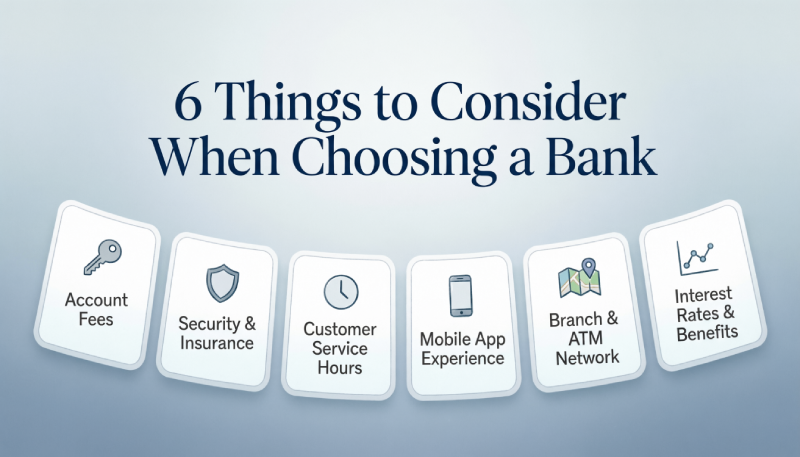
You may find that credit unions offer lower interest rates for their credit cards and they have lower fees & required account minimums than a bank. Which can be especially nice for those of you who struggle to maintain a healthy balance in your accounts. Online banks can offer higher interest rates for their CDs, savings, and checking because they don’t experience the same maintenance fees as companies that deal with paying for the space they occupy, utilities, security, etc. Comparing annual percentage yields (APYs) across institutions is a crucial step in choosing a bank that will help your money grow rather than stagnate. If you want to find best CD rates, Bankrate is a good place to find best CD rates.
Insurance: a non-negotiable factor in choosing a bank
You definitely want to be certain the company you choose to bank with is insured! The two big ones are the FDIC (Federal Deposit Insurance Corporation) and NCUA (National Credit Union Association). If the institution is insured by either the NCUA or FDIC, your deposits will be protected up to $250,000. This protection gives you peace of mind, which is exactly what you need when choosing a bank for your hard-earned savings.
Fees: what to know before choosing a bank
You can often look online to see how a bank/credit union handles fees. You will want to know what the fees are for an overdraft, if there is a minimum required balance for the account type you want before you start to get fees, etc. You don’t want to surprised when money starts disappearing! Many people overlook fee structures until it’s too late, but being thorough in choosing a bank means reading the fine print on monthly maintenance charges and ATM surcharges.
Accessibility and convenience in choosing a bank
If you choose a bank or credit union because you want the option to go into the branch to deposit checks and such, be sure there’s a branch near you! Otherwise, you’ll have to get creative with how you do things. It’s not impossible, especially if you have a smart phone with a nice camera for mobile deposits. It is very possible to do your banking online and through ATMs, just see what you’re most comfortable with. Your daily routine should guide your decision – for instance, if you travel often, choosing a bank with a widespread ATM network will save you from hefty out-of-network fees.
Number of accounts: another detail in choosing a bank
Some people like to be able to separate their saving goals into separate accounts so it’s easier to track the progress. Some institutions will let you have as many as you can handle, others cap you at a few. If this is important to you, ask about this before you open an account. Budgeting enthusiasts will find that choosing a bank with flexible sub-account options makes it much simpler to allocate funds for vacations, emergencies, or big purchases without mixing everything together.
You think you’re more of a bank person or credit union person? I’m a credit union person, myself. Comment or Tweet me, I’d love to know or if you want to know more about financial health you can check out one of my many articles on the topic! No matter which side you lean toward, remember that choosing a bank is a personal journey – what works for your neighbor might not work for you, and that’s perfectly okay.